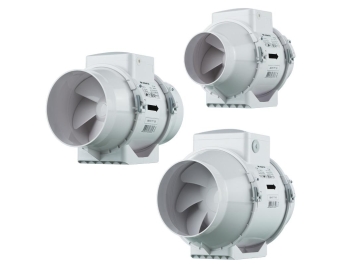
Vents TT 100 Bi-Power 100mm Aspirator - Flow rate 145-187 m3/h
The Vents TT 100 extractor is a bi-powered helical air extractor designed for ventilation systems requiring high pressure and...
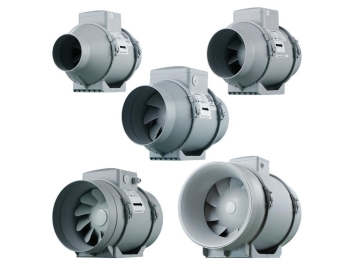
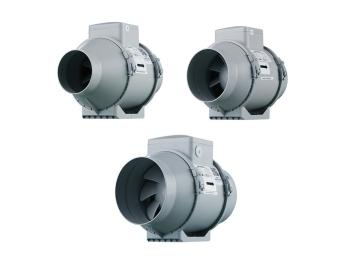
The Vents TT 100 extractor is a bi-powered helical air extractor designed for ventilation systems requiring high pressure and powerful airflow in 100 mm ducts. Thanks to its dual-speed motor, this extractor is ideal for managing air recirculation in small indoor grow rooms and grow boxes. The compact and functional design allows easy installation even in very confined spaces.
Main features
This model features a two-speed motor that allows the air flow to be modulated according to the needs of the system. The structure is made of high-quality ABS plastic, which is durable and long-lasting. One of the special features of the Vents TT line is the quick release system of the motor: the central body can be removed by acting on the special brackets, allowing the fans to be serviced or cleaned without having to remove the connected ducts. The product is supplied unwired, requiring electrical connection via the internal terminal board.
Technical specifications
Flange diameter: 100 mm
Minimum air flow rate: 145 m3/h
Maximum air flow: 187 m3/h
Minimum power: 21 W
Maximum power: 33 W
Noise level at 3 metres: 27 - 36 dBA
Revolutions per minute (min/max): 2180 - 2385 rpm
Degree of protection: IP X4
Installation and Maintenance
The vacuum cleaner can be installed in any position, either horizontally or vertically, thanks to the support brackets integrated in the casing that allow it to be fixed to the wall or ceiling. For the electrical connection, it is necessary to access the contact box located on the extractor body. Maintenance is greatly simplified by the modular design.
Electrical connection diagram
Being a non-wired dual-speed model, the internal terminal box provides a common input for Neutral (N) and two separate inputs for Phase (L1 for minimum speed, L2 for maximum speed). It is possible to connect the fan to a single fixed speed or use an external switch to switch between the two air flow rates.
Please note: L1 and L2 should not be connected at the same time as this could burn out the motor.


 Recalculation in progress …