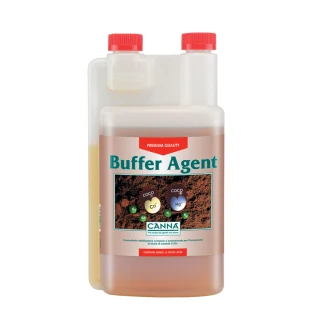


CANE - COGR FLORES A+B
 Recalculation in progress …
CANNA COGr Flores A+B is a two-part fertiliser for the flowering stage on COGr substrates. The formulation is designed for coconut fibre slabs and blocks prepared using the COGr system and provides the necessary nutritional basis for the generative phase.
What is CANNA COGr Flores A+B used for?
COGr Flores A+B is a two-component fertiliser for the flowering stage on COGr coconut fibre slabs and blocks. It provides the nutrients required for the generative phase, along with pH stabilisers and humic and fulvic acids.
The solution is prepared using two separate components, which must be measured out in the correct order to ensure the nutrients remain available.
The growing medium is prepared using Buffer Agent, so the programme starts with the conditioned sheet rather than with potting compost.
Technical data sheet
 Type | COGr two-phase fertiliser for flowering |
|---|---|
 Dosage / parameters | 4 ml/L of A and 4 ml/L of B; pH 5.5–6.2 |
 Stage and frequency | Flowering |
 Application | Add A and B separately to the solution |
 Compatibility / notes | COGr slabs; according to the CANNA programme |
Formulation and product selection
The choice between Vega and Flores depends on the growth stage. Using the two components for the correct stage does not mean mixing all the bottles in the cycle at the same time.
The programme takes into account how water is distributed and removed from the tray, ensuring a consistent progression between vegetative growth and flowering.
Effects on the plant and flowers
During the flowering stage, COGr Flores stimulates fruit development and promotes juice production, resulting in larger fruits. In intensive cultivation, it is applied 1–3 times a day, maintaining drainage levels between 10% and 20%.
Directions for use
The dosage is 400 ml of A and 400 ml of B per 100 L of water, equivalent to 4 ml/L per component. First pour A into the water, mix, and then add B, without mixing the concentrates directly.
The target pH is between 5.5 and 6.2. In intensive cultivation, the frequency and volume of watering should be determined in accordance with the COGr guide and the condition of the growing media.
When changing phases, continue the regime started with COGr Vega, maintaining the specific programme for this medium.
Related products
- CANNA COGr Slab — A compressed coconut fibre slab for container cultivation.
CANNA: research and programmes for every growing medium
Since the early 1990s, CANNA has been developing fertilisers and growing media for growers using soil, coconut fibre or hydroponics. Its approach stems from a practical question: what changes when the growing medium changes? This has led to the creation of distinct product ranges, comprising basic nutrients and complementary products designed to be used in sequence. Research, testing and consultation with growers are integral to the company’s history, which aims to make the choice of programme – from the first nutrient to the additives – as straightforward as possible.
CANNA states that it carries out research, laboratory testing and formulation development in-house. According to its presentation, the development of a new product takes on average around two years: a process that involves the design of specific product ranges for different growing media and cultivation systems.
CANNA grow schedule: COGr
Download the original fact sheet
| Stage | Weeks | Light hours | Buffer Agent A/B | COGr Vega A/B | COGr Flores A/B | Rhizotonic | Cannazym | Cannaboost | PK 13/14 | EC+ (mS/cm) | Total EC (mS/cm) |
|---|---|---|---|---|---|---|---|---|---|---|---|
| Growth | |||||||||||
| Start / rooting (3–5 days) | <1 | 18 | 20 | – | – | 40 | – | – | – | 1.0 | 1.4 |
| Vegetative phase I | 0–3 | 18 | – | 25–35 | – | 20 | 25 | – | – | 0.9–1.3 | 1.3–1.7 |
| Vegetative phase II | 2–4 | 12 | – | 30–40 | – | 20 | 25 | 20 | – | 1.2–1.6 | 1.6–2.0 |
| Flowering | |||||||||||
| Generative period I | 2–3 | 12 | – | – | 35–45 | 5 | 25 | 20–40 | – | 1.4–1.8 | 1.8–2.2 |
| Generative period II | 1 | 12 | – | – | 35–45 | 5 | 25 | 20–40 | 15 | 1.5–1.9 | 1.9–2.3 |
| Generative period III | 2–3 | 12 | – | – | 30–40 | 5 | 25 | 20–40 | – | 1.1–1.5 | 1.5–1.9 |
| Generative period IV | 1–2 | 10–12 | – | – | – | – | 25–50 | 20–40 | – | 0.0 | 0.4 |
Dosage in ml per 10 litres of water. Add the EC of tap water to the recommended EC. Recommended pH as per the original data sheet.
CANNA COGr Flores A+B is a two-part fertiliser for the flowering stage on COGr substrates. The formulation is designed for coconut fibre slabs and blocks prepared using the COGr system and provides the necessary nutritional basis for the generative phase.
What is CANNA COGr Flores A+B used for?
COGr Flores A+B is a two-part fertiliser for the flowering stage on COGr coconut fibre slabs and blocks. It provides the nutrients required for the generative phase, along with pH stabilisers and humic and fulvic acids.
The solution is prepared using two separate components, which must be measured out in the correct order to ensure the nutrients remain available.
The growing medium is prepared using Buffer Agent, so the programme starts with the conditioned sheet rather than with potting compost.
Technical data sheet
| Type | COGr two-phase fertiliser for flowering |
|---|---|
| Dosage / parameters | 4 ml/L of A and 4 ml/L of B; pH 5.5–6.2 |
| Stage and frequency | Flowering |
| Application | Add A and B separately to the solution |
| Compatibility / notes | COGr slabs; according to the CANNA programme |
Formulation and product selection
The choice between Vega and Flores depends on the growth stage. Using the two components for the correct stage does not mean mixing all the bottles in the cycle at the same time.
The programme takes into account how water is distributed and removed from the tray, ensuring a consistent progression between vegetative growth and flowering.
Effects on the plant and flowers
During the flowering stage, COGr Flores stimulates fruit development and promotes juice production, resulting in larger fruits. In intensive cultivation, it is applied 1–3 times a day, maintaining drainage levels between 10% and 20%.
Directions for use
The dosage is 400 ml of A and 400 ml of B per 100 L of water, equivalent to 4 ml/L per component. First pour A into the water, mix, and then add B, without mixing the concentrates directly.
The target pH is between 5.5 and 6.2. In intensive cultivation, the frequency and volume of watering should be determined in accordance with the COGr guide and the condition of the growing media.
When changing phases, continue the regime started with COGr Vega, maintaining the specific programme for this medium.
Related products
- CANNA COGr Slab — A compressed coconut fibre slab for container cultivation.
CANNA: research and programmes for every growing medium
Since the early 1990s, CANNA has been developing fertilisers and growing media for growers using soil, coconut fibre or hydroponics. Its approach stems from a practical question: what changes when the growing medium changes? This has led to the creation of distinct product ranges, comprising basic nutrients and complementary products designed to be used in sequence. Research, testing and consultation with growers are integral to the company’s history, which aims to make the choice of programme – from the first nutrient to the additives – as straightforward as possible.
CANNA states that it carries out research, laboratory testing and formulation development in-house. According to its presentation, the development of a new product takes on average around two years: a process that involves the design of specific ranges for different growing media and cultivation systems.
CANNA grow schedule: COGr
Download the original fact sheet
| Stage | Weeks | Light hours | Buffer Agent A/B | COGr Vega A/B | COGr Flores A/B | Rhizotonic | Cannazym | Cannaboost | PK 13/14 | EC+ (mS/cm) | Total EC (mS/cm) |
|---|---|---|---|---|---|---|---|---|---|---|---|
| Growth | |||||||||||
| Start / rooting (3–5 days) | <1 | 18 | 20 | – | – | 40 | – | – | – | 1.0 | 1.4 |
| Vegetative phase I | 0–3 | 18 | – | 25–35 | – | 20 | 25 | – | – | 0.9–1.3 | 1.3–1.7 |
| Vegetative phase II | 2–4 | 12 | – | 30–40 | – | 20 | 25 | 20 | – | 1.2–1.6 | 1.6–2.0 |
| Flowering | |||||||||||
| Generative period I | 2–3 | 12 | – | – | 35–45 | 5 | 25 | 20–40 | – | 1.4–1.8 | 1.8–2.2 |
| Generative period II | 1 | 12 | – | – | 35–45 | 5 | 25 | 20–40 | 15 | 1.5–1.9 | 1.9–2.3 |
| Generative period III | 2–3 | 12 | – | – | 30–40 | 5 | 25 | 20–40 | – | 1.1–1.5 | 1.5–1.9 |
| Generative period IV | 1–2 | 10–12 | – | – | – | – | 25–50 | 20–40 | – | 0.0 | 0.4 |
Dosage in ml per 10 litres of water. Add the EC of tap water to the recommended EC. Recommended pH as per the original data sheet.
CANNA COGr Flores A+B is a two-part fertiliser for the flowering stage on COGr substrates. The formulation is designed for coconut fibre slabs and blocks prepared using the COGr system and provides the necessary nutritional basis for the generative phase.
What is CANNA COGr Flores A+B used for?
COGr Flores A+B is a two-part fertiliser for the flowering stage on COGr coconut fibre slabs and blocks. It provides the nutrients required for the generative phase, along with pH stabilisers and humic and fulvic acids.
The solution is prepared using two separate components, which must be measured out in the correct order to ensure the nutrients remain available.
The growing medium is prepared using Buffer Agent, so the programme starts with the conditioned sheet rather than with potting compost.
Technical data sheet
| Type | COGr two-phase fertiliser for flowering |
|---|---|
| Dosage / parameters | 4 ml/L of A and 4 ml/L of B; pH 5.5–6.2 |
| Stage and frequency | Flowering |
| Application | Add A and B separately to the solution |
| Compatibility / notes | COGr slabs; according to the CANNA programme |
Formulation and product selection
The choice between Vega and Flores depends on the growth stage. Using the two components for the correct stage does not mean mixing all the bottles in the cycle at the same time.
The programme takes into account how water is distributed and removed from the tray, ensuring a consistent progression between vegetative growth and flowering.
Effects on the plant and flowers
During the flowering stage, COGr Flores stimulates fruit development and promotes juice production, resulting in larger fruits. In intensive cultivation, it is applied 1–3 times a day, maintaining drainage levels between 10% and 20%.
Directions for use
The dosage is 400 ml of A and 400 ml of B per 100 L of water, equivalent to 4 ml/L per component. First pour A into the water, mix, and then add B, without mixing the concentrates directly.
The target pH is between 5.5 and 6.2. In intensive cultivation, the frequency and volume of watering should be determined in accordance with the COGr guide and the condition of the growing media.
When changing phases, continue the regime started with COGr Vega, maintaining the specific programme for this medium.
Related products
- CANNA COGr Slab — A compressed coconut fibre slab for container cultivation.
CANNA: research and programmes for every growing medium
Since the early 1990s, CANNA has been developing fertilisers and growing media for growers using soil, coconut fibre or hydroponics. Its approach stems from a practical question: what changes when the growing medium changes? This has led to the creation of distinct product ranges, comprising basic nutrients and complementary products designed to be used in sequence. Research, testing and consultation with growers are integral to the company’s history, which aims to make the choice of programme – from the first nutrient to the additives – as straightforward as possible.
CANNA states that it carries out research, laboratory testing and formulation development in-house. According to its presentation, the development of a new product takes on average around two years: a process that involves the design of specific product ranges for different growing media and cultivation systems.
CANNA grow schedule: COGr
Download the original fact sheet
| Stage | Weeks | Light hours | Buffer Agent A/B | COGr Vega A/B | COGr Flores A/B | Rhizotonic | Cannazym | Cannaboost | PK 13/14 | EC+ (mS/cm) | Total EC (mS/cm) |
|---|---|---|---|---|---|---|---|---|---|---|---|
| Growth | |||||||||||
| Start / rooting (3–5 days) | <1 | 18 | 20 | – | – | 40 | – | – | – | 1.0 | 1.4 |
| Vegetative phase I | 0–3 | 18 | – | 25–35 | – | 20 | 25 | – | – | 0.9–1.3 | 1.3–1.7 |
| Vegetative phase II | 2–4 | 12 | – | 30–40 | – | 20 | 25 | 20 | – | 1.2–1.6 | 1.6–2.0 |
| Flowering | |||||||||||
| Generative period I | 2–3 | 12 | – | – | 35–45 | 5 | 25 | 20–40 | – | 1.4–1.8 | 1.8–2.2 |
| Generative period II | 1 | 12 | – | – | 35–45 | 5 | 25 | 20–40 | 15 | 1.5–1.9 | 1.9–2.3 |
| Generative period III | 2–3 | 12 | – | – | 30–40 | 5 | 25 | 20–40 | – | 1.1–1.5 | 1.5–1.9 |
| Generative period IV | 1–2 | 10–12 | – | – | – | – | 25–50 | 20–40 | – | 0.0 | 0.4 |
Dosage in ml per 10 litres of water. Add the EC of tap water to the recommended EC. Recommended pH as per the original data sheet.